1Professor of Marketing, Coller School of Management, Tel-Aviv University, Israel.
2Associate Professor Marketing, Bar-Ilan University, Israel.
*Corresponding author: Jacob Hornik,
Professor of Marketing, Coller School of Management, Tel-Aviv University, Israel.
Email: hornik@tauex.tau.ac.il
Received: Sep 11, 2025
Accepted: Oct 20, 2025
Published Online: Oct 27, 2025
Journal: Journal of Artificial Intelligence & Robotics
Copyright: © Hornik J (2025). This Article is distributed under the terms of Creative Commons Attribution 4.0 International License.
Citation: Hornik J. AI-enabled service digital twin: Enhancing value co-creation through a theoretical lens of service-dominant logic. J Artif Intell Robot. 2025; 2(2): 1028.
Digital technology plays a pivotal role in transforming services management and analytics by enabling innovative approaches that surpass traditional requirements. Service managers striving for competitive advantage increasingly rely on advanced technologies to generate and analyze vast, diverse digital datasets. However, the inherent complexity and heterogeneity of such data present significant challenges for effective service analytics. This article introduces Services Digital Twins (SrDT), as a novel data integration and modeling platform designed to address these challenges. SrDT leverages the concept of Digital Twins (DT), virtual replicas of physical objects, processes, humans, or services to mimic, replicate, and predict the real-world operation of their physical counterparts. The conceptual framework, grounded in value co-creation principles from service-dominant logic (S-D logic) and its DART model, is encapsulated in the H5D-SrDT/DART framework, integrating also Human-In-The-Loop (HITL) elements for enhanced adaptability. To illustrate the framework’s applicability, the article focuses on counterfeit detection services, demonstrating how multi-model approaches and advanced technologies can optimize service management. Finally, the paper delineates key theoretical contributions, practical applications, and significant research directions arising from the conceptual framework, offering a robust foundation for advancing the field of smart services.
Keywords: Digital twins (DTs); AI; Services research; Human-in-the-loop (HITL); Marketing IoT; Counterfeit products/services.
Digital transformation has emerged as a multifaceted trend in science and technology, influencing both academia and industry [11]. This progression is driven by cost-effective, miniaturized sensors and advanced technologies such as the Internet of Things (IoT), Machine Learning (ML), Augmented Reality (AR), Artificial Intelligence (AI), Big Data Analytics (BDA), robotics, blockchain, quantum computing, cloud and fog computing, and the metaverse. The metaverse, representing the integration of virtual worlds with reality, fosters novel forms of social interaction, business, and production [39,44]. To enable immersive smart services, the metaverse relies on data collection, transmission, manipulation, and generation, alongside devices including mobile phones, cameras, helmets, and edge nodes. Crucially, technological advancements underpin the realization of a real-world metaverse. Devices like smartphones, tablets, and laptops have become integral to service ecosystems, utilized not only in customers’ daily activities but also by service providers to facilitate interactions with customers [44,62].
The surge in data-generating technologies provides service managers with unparalleled opportunities for insights and decision-making. However, the complexity and heterogeneity of data present significant challenges for effective integration and synchronization [47]. Fragmentation within smart services and the proliferation of research subareas further impede the accumulation of comprehensive knowledge. Previous studies have primarily examined services from limited perspectives, with insufficient efforts to aggregate and integrate models and data to uncover underlying causes of changes in service performance [1,2].
Data complexity, diversity, and heterogeneity hinder effective service monitoring and decision-making [15,47]. Therefore, data integration and synchronization are vital for improving service performance [9]. These processes hold analytical implications across conceptualization, convergent validation (triangulation), and decision-making. The challenge is particularly acute in large-scale smart services, such as healthcare and banking, where the volume of devices, customers, and workers amplifies complexity.
To address these challenges, integrated and analytical data-driven systems are needed to support effective management decisions [6]. Additionally, data fusion techniques can integrate the human experience into the process, enriching insights and decision-making [26]. Digital Twin (DT) technology offers a compelling solution by leveraging advanced technologies, such as IoT, big data, AI, and machine learning, to mitigate these issues. DTs enhance operational efficiency by synchronizing and integrating diverse data sources, enabling informed and adaptive decision-making. In the evolving digital landscape, Digital Twins (DTs) have emerged as a transformative tool for data aggregation and integration, enabling advancements in decision-making and technology across diverse service ecosystems, such as healthcare, tourism, banking, and transportation [4,5,49]. Recognizing their strategic importance, Gartner consistently ranked DTs among its Top 10 Strategic Technology Trends from 2019 to 2022 [3]. Defined by the DT Consortium as a “virtual representation of real-world entities and processes, synchronized at a specified frequency and fidelity” [3], DTs enable service providers to replicate services digitally, thereby enhancing predictive capabilities, optimizing processes, and minimizing errors [6]. Through bi-directional synchronization, DTs facilitate seamless communication and updates between real and virtual systems, enabling continuous optimization of services. This integration addresses critical challenges in service research, fostering theoretical advancements and practical applications. AI-enabled DTs are particularly effective for monitoring service performance, forecasting demand, and analyzing customer behavior, making them a valuable asset for service design, testing, and operational efficiency [30]. By converging multiple technologies, DTs create opportunities for high-quality, data-driven service studies, offering personalized experiences while reducing barriers in service research [7]. Their capacity for value co-creation between service providers and customers transforms them into strategic advisors within the service ecosystem [2]. Furthermore, DTs support remote collaboration, accelerating innovation and discovery, thereby enhancing service delivery and research efficiency.
Filling the literature gap
The present study addresses the pressing need for systems capable of aggregating and integrating heterogeneous, complex, and time-dependent data generated by advanced technologies for service management and analytics. Specifically, this paper explores how a service digital twin (SrDT) can foster value co-creation and enable new opportunities within digitally driven smart service ecosystems. Inspired by recent successful DT applications, such as the Venue Twin software used for the Paris 2024 Olympic Games, which supported planning, athlete safety, audience monitoring, and operational efficiency, we propose future SrDT applications tailored to smart service ecosystems. These applications demonstrate how DT technology can streamline processes, reduce costs, and enhance stakeholder collaboration through user-friendly, cloud-based solutions [18]. In this paper, we introduce a hybrid conceptual framework -H5D-SrDT/DART- to guide service research and application. Rooted in a multi-perspective approach, the framework synthesizes contemporary marketing concepts with insights from the five-dimensional DT framework [4,45,49,58] and service-dominant logic (S-D logic) [53]. This integration highlights the potential of SrDT to transform service delivery by aligning precision, predictability, and repeatability with customer-centric service design. S-D logic underscores the co-creation of value by customers and service providers through resource integration and service exchange [41]. This perspective is further supported by models like DART (Dialogue, Access, Risk-Benefit, Transparency), which emphasize collaboration and transparency in shaping customer experiences [50]. By incorporating the principles of DART and Human-In-The-Loop (HITL) expertise [42], the H5D-SrDT/DART framework bridges technological precision with human intuition to optimize service management and customer experience. Aligned with calls for more conceptual research [28,52], this paper contributes a visionary perspective that combines theoretical and practical insights to advance smart services Mac Innis [33]. Our study can be seen as one of envisioning, as MacInnis [33] terms it, in that it seeks to call attention to “what we have been missing and why it is important,” and “reveal what new questions can be addressed” (p. 138) that combines theoretical and practical insights to advance smart services. Therefore, we followed closely the template approach of crafting a rigorous conceptual paper as proposed by Jaakkola (2020) by drawing new perspectives from SrDT (methods theories), smart services (domain theory), and integration and synthesizing issues (problematization). As such, this paper seeks to provide a novel conceptualization by proposing the SrDT as a unique methodological and practical system to overcome problematizations like large and fragmented service data. SrDT integration technology enables service providers to make informed decisions, enhance customer satisfaction, and foster large-scale patronage. We follow the general conceptual frameworks and propositional inventories delineating a conceptual entity in marketing research [28,33]. Thus, the proposed framework not only addresses theoretical and practical challenges but also highlights future research directions aimed at leveraging SrDT for smarter, more effective decision-enabling platforms.
The key contributions of our study are as follows: First, we introduce the SrDT concept to service professionals, presenting it as a cutting-edge technology for enabling smart services. Second, we position SrDT as a distinctive data fusion system capable of aggregating and synchronizing complex, heterogeneous datasets for service management. Third, we propose a novel conceptual framework, H5D-SrDT/DART, offering a more analytical and structured approach to managing and researching services. Fourth, we illustrate how managers can adopt SrDT-based advanced data analytics to craft customer-centric strategies that enhance business operations. Fifth, we demonstrate the applicability of this innovative system through an example of anti-counterfeiting services, highlighting its potential to address real-world challenges. Lastly, we identify key substantive and methodological challenges for future research, providing a roadmap for advancing service science.
Given that conceptual papers typically focus on proposing new relationships among many constructs to develop a rigorous, logical, and complete argument from the diverse constructs [28], below is a concise synthesis of key themes and findings from recent smart services scholarship. For considerations of readability and space, we provide additional details in an extensive online supplement. The following sections will briefly explore the growing landscape of smart service ecosystems, data, models, and technologies to underscore the critical need for integrated and aggregated solutions in decision-making.
Smart services
Services are widely understood as outcome-based solutions that establish value-sharing partnerships between customers and service providers [7]. Evaluating services is a pivotal factor in determining providers’ success, as it significantly influences customer satisfaction, loyalty, Word-Of-Mouth (WOM), and, ultimately, profitability. However, service evaluation is inherently complex due to the multitude of models, theories, and constructs it involves, spanning dependent and independent variables, making it a multidimensional and multilevel concept [9]. Despite its importance, there is no unified measurement system to comprehensively address stakeholders’ needs or systematically improve service quality [15]. The inherent complexity of service systems arises from the distinctive characteristics of services, including simultaneity, intangibility, heterogeneity, and perishability.
Among the various models and constructs for evaluating services, several key approaches merit mention. First, SERVQUAL [38] assesses service quality by analyzing gaps between customer expectations and perceptions, emphasizing five dimensions: tangibility, reliability, responsiveness, assurance, and empathy. Second, the Kano model [25] prioritizes customer needs, classifying preferences into five categories basic, performance, excitement, indifferent, and reverse needs thereby identifying features that drive customer satisfaction. Third, expectation confirmation theory (ECT); [43] evaluates customer satisfaction by comparing pre-purchase expectations with post-purchase outcomes. Fourth, the hierarchical model proposed by Ho, Liu, and Chen [47] outlines a multilevel evaluation framework, with service quality reflected across five dimensions: interaction quality, physical environment, website quality, outcome quality, and ordering process. Finally, the DART model [50] emphasizes a dialogic process between client and provider, measuring service quality through four key dimensions: dialogue, access, risk assessment, and transparency. These models and theories collectively contribute to the understanding and enhancement of service evaluation, providing businesses and researchers with tools to improve service quality and customer experience (CX). By integrating SrDT into these frameworks and leveraging DT’s advanced interoperability, both service theory and practice can achieve substantial advancements, as will be elaborated in subsequent sections.
The term “smart” encompasses all technologies that embed or enhance functionality through advanced capabilities. Brill and Nissen [9] define smart services as “[a] user-centric, context-specific service that draws data from an interface to its environment and uses artificial intelligence for task processing to provide at least one beneficial solution to a customer’s problem” (p.171). Building on this, Götz, Hohler, and Benz [15] identify four core aspects differentiating smart services from traditional ones. First, smart services utilize embedded Information and Communication Technologies (ICT), enabling seamless data transmission and generation. Second, they rely on Big Data analytics for their realization and effectiveness. Third, they incorporate varying levels of automation, ranging from partial to full, often integrating intelligent systems like cognitive technologies to enable these functions. Fourth, from a customer perspective, smart services deliver greater individualization by adapting to environmental conditions and customer preferences.
Recent advancements in smart services include the development of AI language models such as ChatGPT, Google Bard, and Meta’s LLaMA, which have transformed human-computer interactions and expanded data-processing capabilities [35]. Additionally, platforms like Amazon and Aliexpress aggregate vast datasets comprising millions of user transactions and demographic information. This trend is mirrored in retail innovations through technologies like RFIDs, product reviews, social networking sites, mobile marketing, and Internet commerce. These colossal datasets necessitate advanced computational tools to model customer preferences and behaviors effectively. The challenges involve processing billions of data points, facilitating communication between systems, and executing operations within nanoseconds. IoT and SrDT technologies address these challenges by optimizing the monitoring ecosystem to reduce latency in large-scale data processing, granting decision-makers enhanced visibility into assets, costs, and liabilities. This capability empowers customers and service providers to co-create value through robust interaction and collaboration within the service ecosystem. The S-D logic framework proposed by Vargo and Lusch [53] reinforces this perspective by positioning service as the fundamental basis of exchange. Smart services, aligned with S-D logic, offer customers novel value propositions, such as eliminating unpleasant surprises, thereby enhancing satisfaction and trust in the service ecosystem [16].
Service ecosystem
The service ecosystem perspective is recognized as a significant conceptual advancement in S-D logic [54]. It describes a relatively self-contained, self-adjusting system where resource-integrating stakeholders are connected through shared institutional arrangements. Within this ecosystem approach, each member influences the overall trajectory of the ecosystem. For instance, a reduction in the number of customers diminishes the ecosystem’s value for service providers and other customers, while the entry of a new supplier offering complementary services enhances its value for all stakeholders. These dynamics emphasize the complex, multi-actor, and dynamic nature of value co-creation [55].
The term computational services (Web Appendix 1) refers to leveraging algorithms, programming, and automation to optimize service performance. Computational tools and techniques enhance strategic and operational aspects of services, making them more efficient and data-driven [9]. For example, Timberland implemented NFC-enabled tablets in select New York City stores to facilitate consumer engagement, enabling point-of-sale interactions and wish list sharing. These innovations illustrate the role of advanced service monitors in generating and analyzing multi-type data, including homogeneous, heterogeneous, structured, unstructured, temporal, and non-temporal data. However, as previously discussed, a major challenge in smart services lies in the proliferation of fragmented data and knowledge with minimal integration. This fragmentation increases the risk of decision-makers being overwhelmed or misled by piecemeal evidence [31]. To address this, we propose SrDT as an integrated platform designed to aggregate, synchronize, and visualize service data in real-world business environments. SrDT provides a strategic mechanism for advancing service management by leveraging computational technologies [2]. It facilitates collaboration, innovation, and market insight, ensuring effective integration and planning to achieve commercial success within competitive service ecosystems.
“Digital Twin is at the forefront of the Industry 4.0 revolution facilitated through advanced data analytics and the Internet of Things (IoT) connectivity” [45].
A Digital Twin (DT) represents a virtual model closely aligned with a real-world asset, whether a product or service, enabling seamless information exchange between the two. This relationship allows the asset and its twin to operate synergistically, where the twin informs, controls, assists, and enhances the performance of the physical entity. Current DT implementations leverage advanced technologies such as IoT, Artificial Intelligence (AI), and Machine Learning (ML), alongside emerging modeling methodologies [4]. The National Academies of Sciences, Engineering, and Medicine (NASEM) report, Foundational Research Gaps and Future Directions for Digital Twins (2023), emphasizes DT’s transformative role in knowledge dissemination and scientific progress, as summarized in Nature (March 2024). DT technology is integral to digital transformation, enabling novel business models and decision support systems. Positioned at the forefront of disruptive innovation, DT connects physical and virtual realms, allowing simulation, analysis, and control [22]. It achieves this by interacting with physical assets, predicting future states, and calibrating models using real-time data from the physical entity, summarized in Table 1 Web Appendix 2.
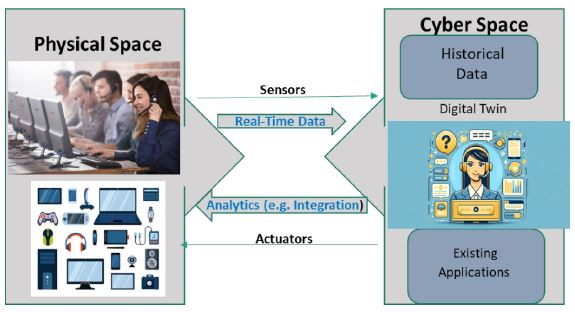
DTs are cyber-physical systems, that collect data via sensors, actuators, robots, or drones, and visualize it through web or mobile applications. They serve as virtual representations of smart assets, integrating essential components and properties, continuously updated throughout the asset’s lifecycle [5]. The implementation process involves aggregating and integrating smart components into new or existing assets. This process enables the creation of comprehensive, digitized models capable of simulating, monitoring, diagnosing, predicting, and controlling an asset’s state and behavior. The full scope of DT capabilities is realized through integrated multiphysics, multiscale, hyperrealistic, and dynamic probabilistic simulations, which reflect the performance of real assets in real-world conditions. These fundamentals are illustrated in Figure 1 and further elaborated in Web Appendix 2.
Similarly, a service digital twin (SrDT) represents a virtual model of a real service, offering a dynamic platform for analyzing, predicting, and optimizing service processes. SrDT technology has the potential to uncover underlying values and patterns within real services, identify potential problems, and predict service behavior in response to various crises whether economic, technological, natural, or social [60]. By incorporating visual effects, SrDT communication becomes more engaging and effective, enabling service providers to enhance user experiences through visually appealing and user-friendly designs. Service designs can be simulated within SrDT frameworks to evaluate potential outcomes without introducing disruption or uncertainty into real-world environments. When combined with advanced technologies such as Artificial Intelligence (AI), Machine Learning (ML), and Marketing IoT (MIoT), SrDTs can identify patterns, anticipate future challenges, and recognize opportunities. This integration facilitates the development of smarter services, improved planning, and more informed decision-making. Notably, the current literature distinguishes between digital models, digital shadows, and digital twins [3].
Digital models, digital shadows, and DTs
The current literature distinguishes between digital models, digital shadows, and digital twins [3]. The digital model includes the asset and a description of all relevant properties that influence the prospective use of the model. Thus, the digital model is a virtual, often static, representation of a physical asset. Synchronization makes a digital model a digital shadow. The digital shadow typically captures only certain key attributes or parameters of the real asset, often at a lower level of fidelity, to reduce complexity and data processing. It can be used when it is not necessary to maintain a complete, highly detailed DT, such as in situations where only specific performance metrics or general conditions need to be monitored. The digital shadow is fed by a one-way data flow with the state of an existing real asset. A change in the state of the real asset leads to a change in the digital asset, but not vice versa. In contrast, in DT, the data flow is bidirectional, running to and from the physical asset. DT, in this conception, tends to be regarded as an upgraded version of digital shadow [13]. Interaction is what distinguishes DT from a digital shadow. Changes in the digital representation lead to changes in the real asset. By creating digital twin shadows, managers can break down complex systems into smaller, more manageable components, allowing for better analysis, optimization, and control.
Adaptive learning
Adaptive learning [51] is a crucial aspect of the DT (and SrDT) approach. It refers to the ability of DTs to continuously learn from new data and update their models to improve accuracy and effectiveness over time. This process allows the system to adapt to changes, detect emerging patterns, and make it more robust against ever-evolving new ideas and technologies. Recent meta-analyses [45,58] collectively signal an accelerating trend in adopting DT technology, spurred by its ability to merge, aggregate, and analyze large datasets, significantly elevating operational efficiencies and predictive capacities across various sectors. SrDT illustrates the changing dynamic and adaptive learning of the service Intangibility, Heterogeneity, Inseparability, and Perishability (IHIP) characteristics of the CX [60].
SrDT fusion capabilities
“Digital Twins thrive on data integration” [49].
Service research and management rely on reliable data, with data fusion techniques playing a pivotal role in synthesizing diverse datasets [32]. A key challenge in smart services is the fragmentation of data, often leading to inconsistencies, noise, and conflicts due to multiple sources, such as physical entities, virtual models, and customer interactions. For instance, GPS data offers valuable insights into travel behavior but faces challenges like signal loss and privacy concerns, necessitating advanced processing techniques. Data fusion addresses these issues by integrating data from various sources, reducing information entropy, minimizing Root Mean Squared Error (RMSE), and improving relevance to indicators like service quality. This process ensures data accuracy, consistency, and mutual verification, creating a unified and comprehensive data representation. Advanced SrDT technology incorporates algorithms such as neural networks and Bayesian methods [13] to aggregate and harmonize structured, unstructured, temporal, and non-temporal data. Techniques like data matching, conflation, and assimilation [32] further enhance the ability to resolve discrepancies, ensuring a complete and dependable service system perspective.
What sets the SrDT concept apart is its integration of five advanced technologies: big data, AI, Multi-nodal Interactions (MMI), cybersecurity, and quality of experience (QoE)-powered communications [45]. Big data gathers extensive information primarily through IoT sensors, cloud and fog computing, and social networks, providing a robust foundation for SrDT applications. This data enables comprehensive measurements of real services, secured through cutting-edge cybersecurity methods [31] and analyzed using advanced AI algorithms to derive actionable insights. MMI facilitates a seamless interaction between digital and real services, enhancing data quality and enabling the SrDT to evolve dynamically based on real-time interactions. These interactions are supported by high-performance networks, ensuring reliable QoE-powered communications for continuous feedback and optimization [58].
Data integration
Service monitoring often lacks a unified framework for integrating diverse knowledge domains and understanding the behavioral, cognitive, and emotional factors influencing service attractiveness. SrDT offers transformative potential by providing real-time, integrated, and synchronized customer and service data, thereby addressing these gaps. Advances in integrated cloud-edge computing mechanisms with ubiquitous connectivity and AI are critical for SrDT development, ensuring low-latency processing and the integration of real-time data alongside massive historical experience [6,31]. Data collected is centralized in repositories, involving processes like normalization, cleaning, and transformation to ensure accuracy across sources [13]. A notable example is the MindSphere™ platform, applied in the EITFood project [45].
The emergence of SrDT technologies constitutes a promising avenue for improving decision-making through tools such as MATLAB, Simulink, AWS IoT, IBM IoT, and Microsoft Azure IoT Hub DTs. Techniques like Support Vector Machines (SVMs) and K-Means, alongside deep learning approaches such as CNNs and RNNs, enable the fusion of diverse data types, including text, images, audio, video, and physiological signals [13]. These tools facilitate holistic service monitoring akin to DT successes in smart cities and healthcare [15]. By creating virtual replicas of services, managers can simulate and test scenarios, enabling predictive maintenance, recommendation systems, performance optimization, and remote monitoring [23,27]. Finally, addressing the complexity of services requires leveraging aggregated and integrated multilevel systems measured by Hierarchical Linear Modeling (HLM) or Multilevel Modeling (MLM). These methods explore nested data structures, providing nuanced insights into relationships at multiple levels [31]. The literature has discussed different synchronization techniques along with their uses and requirements. Buffering schemes and fog computing are examples [13] (Web Appendix 3).
Data interoperabilitys
Interoperability refers to the ability of different SrDT platforms and protocols to seamlessly communicate and exchange data with each other (system-to-system). Different SrDT platforms may be interconnected, allowing users to move seamlessly between them. When an SrDT system or series of components are interoperable, they can work together, share information, and use it to provide specific services. An interoperable system provides and guarantees effective communication between the different system components, thus achieving the correct execution of complicated or critical processes [16]. Interoperability of this kind ensures that various SrDTs can seamlessly interact and integrate across different platforms and devices, fostering a unified service environment within a specific metaverse [2]. For example, in the context of fraud detection services, interoperability occurs when integrating multiple systems from different stakeholders or when migrating from one system to another. Failure to address interoperability can result in data silos, increased complexity, and reduced system efficiency. Interoperability is vital for realizing SrDTs’ full potential in enhancing user engagement and facilitating value co-creation within the burgeoning metaverse ecosystem. This approach to smart service management could mark a paradigm shift for service research and myriad service applications, facilitated by cloud technology’s capacity to handle large data volumes and complex computations [40]. To assist in framing it, we have devised an integrated conceptual framework (Figure 2), which can guide SrDT use for smart services and for investigating new service challenges.
Conceptual framework
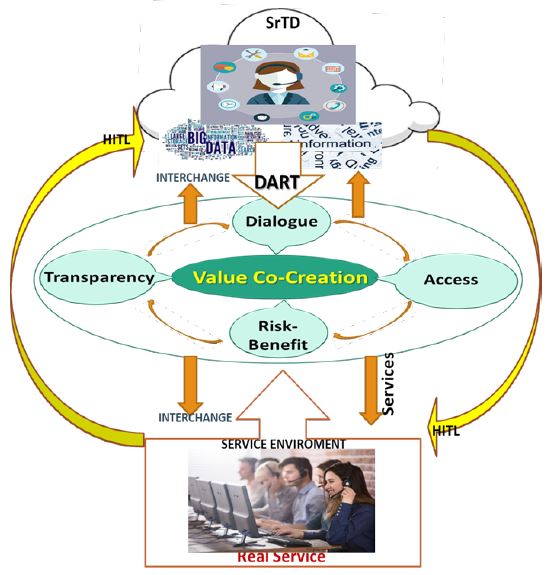
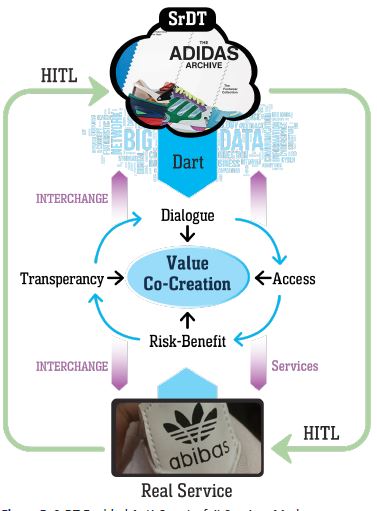
Our novel conceptualization of SrDT for smart services is depicted in Figure 2. As illustrated, it combines the commonly used and empirically validated five-dimensional DT model (5D-DT) [3,24,49], advanced logic of value as articulated by the SD-logic and its DART (Dialogue, Access, Risk-benefit, Transparency) model [50], and by human input support (HITL) [42]. The proposed framework captures the integration of heterogeneous analytical models and evolving data related to the entire service life cycle.
The five dimensions of SrDT (5D-SrDT)
As aforenoted, an SrDT is a virtual representation of a real service, and its associated environment and processes, which is updated through the exchange of information between the real and virtual service. As a dynamic model, it consists of five key dimensions (5D-DT) [3] depicted in Figure 3, which unlock its full potential and are the basis for our conceptualization.
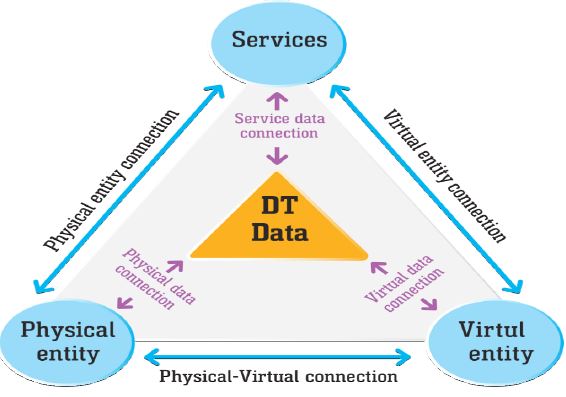
The first dimension is the physical/real entity: a real service with monitoring systems installed to gather an array of data. The second dimension is the digital model: the virtual counterpart of the real service designed to use the data collected from various monitors for analytical purposes. The digital model captures the essential characteristics and behavior of the real service in a virtual environment. The third dimension is data connection: the vital link that ensures two-way data communication between the real service and the digital model. The fourth dimension is services and analytics. Here data and insights from the digital service are used to provide valuable information and services. These may include layout performance monitoring, anomaly detection, predictive maintenance, recommendations, and even optimization of the real service performance. The fifth and final dimension is real-time feedback and optimization, which closes the loop, allowing the digital service to directly influence the real service. Based on insights and simulations, the SrDT can recommend changes to the real service operation and offerings, leading to improved performance, efficiency, and safety.
SrDT data
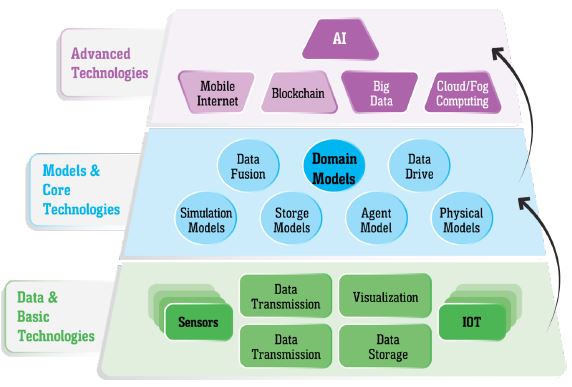
Establishing a unified data-sharing warehouse is a critical component of any SrDT architecture, serving as a centralized information source [40]. IoT devices and basic technologies contribute real-time data (Figure 4), such as temperature and location, facilitating continuous process monitoring and control [4]. This enables the effective storage, analysis, and application of large-scale data for decision-making and process optimization. The SrDT system integrates multiple stages: data generation, integration, aggregation, storage, transmission, and processing. Big data analytics and data mining algorithms, such as K-means, expectation–maximization, nearest neighbor, naive Bayesian models, and Classification and Regression Trees (CART), uncover hidden insights within vast datasets [19]. Predictive analytics leverages historical data to generate real-time insights and forecast future outcomes. To manage multisource heterogeneous data, data fusion techniques synthesize and filter information from various sources, ensuring accurate and actionable service insights [32].
SrDT customer data: The digital revolution has provided valuable technologies for monitoring almost all aspects of consumer behavior, cognition, and emotions [44] as well as monitoring models and customer interaction [12]. In Web Appendix 4 we explore each of these in detail. The specific data and models collected depend on the application and industry. Some examples include insights into customer behavior, such as purchase history, frequency of use, and response to different features or configurations. Information on how customers interact with the asset could include usage patterns, preferences, and feedback. Information on how to tailor assets to individual customer preferences and needs might involve tracking customization options and their impact on performance or satisfaction. Customer feedback and suggestions can be used to refine and improve the service over time. Also, integrative customer data from other systems or platforms that interact with the SrDT can allow a more comprehensive view of how different customer elements work together. By leveraging this data, SrDTs can provide valuable insights, enhance performance, improve customer satisfaction, and support decision-making processes. It is important to emphasize, however, that while the benefits of such technologies are undeniable, it is also essential to consider privacy and ethical concerns associated with the collection and analysis of emotional data.
Environmental data
Like tangible products, services too are influenced by various environmental conditions. Therefore, service environment data is monitored mainly via IoT or MIoT devices equipped with sensors to collect data on, for example, temperature, humidity, light, and noise levels, which are likely to influence consumer behavior. Analyzing such data alongside service and consumer data is important for SrDT, as it furnishes the information necessary to ensure real service-virtual service consistency. Thus, environment coupling technologies are required to consider the effect of environmental factors on service management and research [15]. In tandem with such data-driven design approaches, SrDT can support the service management process by, for instance, allowing more transparent communication between service personnel and professionals. At the same time, decision-makers will have the possibility of ‘mining’ SrDT-generated through-life data to detect patterns and cull design-related insights, ultimately enabling broad exploration of the service.
SrDT simulation
SrDTs enable real-time simulations using “what-if” methods to predict service performance [24]. Simulation modeling employs digital prototypes of real services to forecast outcomes, supported by software such as Matlab, FlexSim, and Simul8 for real-time data analysis and IoT connectivity [34]. Unlike traditional simulations, SrDTs establish bidirectional communication with their real counterparts, receiving real-time data for performance monitoring, diagnostics, and process optimization. Additionally, SrDTs generate metadata from smart monitoring devices, providing deeper insights into service operations [12]. While simulation models predict future service states based on initial assumptions, SrDTs track both past and current states of real services. This distinction explains common confusion, as computational models used in simulations are often integrated within SrDT frameworks to predict future states and optimize service operations [5]. By continuously updating these models to reflect specific service behaviors, SrDTs enhance decision-making, enabling failure forecasting, degradation analysis, and optimization of remaining service life.
SrDT models and supporting technologies
The second pillar of any DT system comprises data-generating models, software, and technologies (Figure 4). SrDT’s primary advantage lies in its capacity to integrate diverse design models according to predefined rules and the recommender system. Several domain models play pivotal roles in enabling SrDT functionality, each tailored to specific tasks. For instance, the SMARTBUY geo-marketing model utilizes Wi-Fi Access Points (APs) within a store to serve as customer proximity detectors, enhancing customer service [7]. A significant benefit of SrDT lies in its ability to aggregate and synthesize data systems and models to generate actionable recommendations aligned with managerial objectives. Task-Specific Models (TSMs) exemplify this capability by leveraging machine learning algorithms optimized for specific tasks or activities, such as decision-making, problem-solving, or learning [46]. TSMs allow the SrDT to sequence actions effectively under defined conditions, ensuring efficient performance for specialized tasks. For a comprehensive discussion of DT models, see Tranta and Pileggi [51]. Modern advancements in AI also point to the potential transition from task-specific models to foundation models, which utilize massive sets of unlabeled data to support a variety of tasks with minimal fine-tuning. These foundational models promise to enhance SrDT capabilities by reducing development time while expanding flexibility across different applications [61]. Such developments position SrDT as a dynamic tool for integrating and leveraging models and technologies to meet diverse service requirements.
Human-in-the-loop
While smart services are highly digitalized on every level, humanity remains a critical element in their operation. Adequate representation of human intuition is essential for achieving the completeness and accuracy of SrDTs, incorporating human expertise, knowledge, and feedback into their framework. HITL, as illustrated (Figure 2), refers to a collaborative approach where human intuition combines with automated systems to deliver enhanced results. While advanced technologies like SrDTs are revolutionizing service monitoring, HITL plays a pivotal role in ensuring comprehensive and effective oversight. This approach is particularly relevant in scenarios where AI systems face challenges in decision-making or task execution due to complexity, uncertainty, or ethical considerations [42]. HITL sources may include stakeholders such as domain experts, service personnel, managers, and customers. Current visual analytics significantly enhance interactional capabilities by guiding expert judgment through visually presented data characteristics [6]. HITL systems provide several advantages, including improved accuracy, performance, and transparency. These systems enable stakeholders to address ethical considerations, adapt to changes in regulatory requirements, engage in SrDT monitoring, and actively contribute to data analysis, decision-making, and recommendations. Additionally, customers can improve SrDTs by providing insights that are difficult to obtain through smart technologies, such as mood or disabilities [48]. In summary, the collaborative capabilities of SrDTs, derived from the aggregation and integration of diverse data-generating technologies, advanced models, and HITL, hold significant potential for enhancing service management and designing services that are more appealing to customers.
The DART model
The DART model, introduced by Prahalad and Ramaswamy [41], serves as a robust framework for analyzing the key factors that contribute to value co-creation. Situated within the broader context of service-dominant logic (S-D logic), this model has undergone empirical validation, cementing its status as an advanced and effective tool for understanding co-creation dynamics. The acronym DART represents four critical dimensions: Dialogue, Access, Risk Assessment, and Transparency. Dialogue involves fostering open and bidirectional communication between companies and stakeholders, a prerequisite for establishing trust and mutual understanding. Access ensures that all relevant parties, including customers, service providers, and other stakeholders, are equipped with the information, tools, and opportunities necessary to actively engage in the co-creation process. Risk Assessment emphasizes the identification, evaluation, and mitigation of potential risks that may hinder the success of value co-creation, enabling stakeholders to prepare for and address challenges. Transparency ensures clarity and openness in decision-making processes, data usage, and operational methodologies, fostering trust and alignment among all stakeholders. The DART model highlights the interdependence of these dimensions, offering a structured approach to cultivating collaborative environments conducive to effective value co-creation. Among the myriad service evaluation frameworks available, DART was selected as the basis for our conceptual framework due to its theoretical rigor, practical applicability, and empirical robustness. Integrating the DART model into organizational strategies empowers companies to adopt a customer-centric approach, drive innovation, and enhance Customer Experience (CX). All these are demonstrated by the following anti product services.
SrDT for counterfeit detection services
Counterfeiting poses significant challenges, impacting businesses, consumers, and the economy (Boswort, 2016). Thus, it is not surprising that companies are exerting much effort to combat counterfeits, while also enlisting the services of counterfeit detection agencies such as Scribos (https://www.scribos.com/anti-counterfeiting-solutions/stop-counterfeiting); Visua (https://visua.com/use-case/counterfeit-detection-with-visual-aid); and Integra (https://www.integra-tech.com/counterfeit-detection), which employ a variety of methods and sophisticated technologies to combat counterfeits and authenticate products. Advanced methods, such as AI-generated content and phishing, exploit consumer trust and complicate detection [47]. Despite various anti-counterfeiting efforts, many approaches remain fragmented and lack real-time data sharing (Hall, 2012). SrDT technology offers a transformative solution by aggregating anti-counterfeiting measures and technologies, including RFID, blockchain, and machine learning. By creating a secure, virtual replica of genuine assets, SrDTs enable real-time tracking, anomaly detection, and authentication. For instance, SrDTs can compare a product’s attributes to its digital twin, flag inconsistencies, and trace counterfeit origins within the supply chain. Platforms like Visua provide blockchain-based counterfeit detection systems for post-supply chain monitoring, while Integra Technologies offers comprehensive semiconductor authenticity testing, ranging from marking to full AC/DC functionality tests (https://www.visua.com/use-case/counterfeit-detection-with-visual-aid; https://www.integra-tech.com/counterfeit-detection).
SrDTs enhance fraud detection through behavioral analysis by identifying deviations from established customer profiles. They also support automated quality control by comparing physical attributes with digital counterparts, particularly valuable in sectors like pharmaceuticals and electronics. Moreover, by integrating blockchain, SrDTs provide tamper-proof transaction records, improving reliability [56]. This unified approach enables customers to verify product authenticity via mobile applications, scanning QR codes or NFC tags to access SrDT information. Manufacturers can share SrDT data with customs and law enforcement agencies for efficient border inspections and collaborate on legal measures against counterfeiters. Anti-counterfeiting strategies leveraging SrDTs prove cost-effective, safeguarding brands, ensuring customer trust, and delivering new value propositions through co-creation with stakeholders [47,59].
Anti-counterfeiting services as value co-creation
By leveraging the SrDT conceptual framework (Figure 5) alongside value co-creation principles, companies, and agencies can develop innovative and effective solutions to combat counterfeit assets, enhancing market integrity. Value co-creation in anti-counterfeiting campaigns emphasizes collaboration among service providers, customers, suppliers, distributors, and regulatory bodies. The DART model, comprising Dialogue, Access, Risk Assessment, and Transparency, provides a structured approach to fostering cooperation and shared responsibility.
Open communication between stakeholders is a fundamental component of value co-creation. Dialogue enables the identification of vulnerabilities, the sharing of counterfeiting trends, and the improvement of detection strategies. Through active engagement, stakeholders can collectively enhance their capacity to address counterfeiting challenges. Additionally, access to real-time information and tools, such as authentication apps and verification systems, empowers stakeholders to detect and prevent counterfeit assets. This availability of up-to-date resources fosters more effective collaboration and decision-making. Another critical element is risk assessment, which involves identifying vulnerabilities within the supply chain and implementing strategies to mitigate risks. These strategies may include strengthening product packaging, improving traceability, and securing distribution channels to reduce exposure to counterfeit goods. Furthermore, transparency plays a vital role in fostering trust and accountability. By promoting visibility into asset origins and production processes, stakeholders can establish mechanisms for reporting counterfeiting incidents and facilitate consumer differentiation between genuine and counterfeit products. SrDT technologies can significantly enhance these efforts by providing real-time monitoring, simulation capabilities, and data analytics tools. Virtual representations of services allow stakeholders to test scenarios, identify patterns, and detect anomalies indicative of counterfeiting. For example, SrDT models can simulate diverse conditions and analyze performance data to reveal inconsistencies or irregularities. These tools will enable proactive responses and reduce the risk of counterfeit items entering the market. By adopting service-dominant logic and integrating SrDT technologies, anti-counterfeiting campaigns can strengthen trust, foster collaboration among stakeholders, and create integrated, data-driven strategies. This approach will not only minimize the damages caused by counterfeiting but also enhance overall market integrity and stakeholder confidence.
The distinct contributions of the SrDT paradigm to services concern the seamless synchronization with several pioneering technologies such as the IoT, AI, big data, streaming data analytics, software-defined cloud/fog environments, blockchain, etc. In essence, SrDTs provide the foundation for creating realistic and interactive metaverse experiences. In this conceptual article, we have proposed SrDT as a data fusion technology that is capable of aggregating and integrating heterogeneous data and models and establishing value co-creation, thus enhancing CX. SrDT can serve as a platform in which a combination of different embedded technologies, tailored for a specific service, is used to collect, process, and integrate data and design models, thus providing bi-directional data linkage between the real and digital world. This combination of strategic solutions promises to create, in our view, a truly complete picture of the monitored service, in contrast to common standalone solutions. Indeed, the SrDT, as a virtual mirror, enables an understanding of a smart service as more than the sum of its digital representations. The integration of a consumer-centric element into SrDT means that the impact of even small changes in consumer be havior and data can be assessed much sooner and without the need for survey research. SrDT allows service design scenarios to be thoroughly tested to predict their performance. Thus, we conceptualize SrDT as an integrated and synchronized framework that facilitates the aggregation, description, prediction, prescription, and visualization of one or more characteristics of a service or class of services within a real service environment like anti-counterfeiting. Consumer confidence, business credibility, and economic development are all negatively impacted by the prevalence of counterfeit assets in circulation. The potential role of SrDT technology in finding a solution to this issue has been explored in the article. SrDT represents a cutting-edge solution that mitigates counterfeit risks as it can accurately emulate hardware, software, and firmware. By collecting and providing data, it allows real-time monitoring, integration, analysis, and emulation. The proposed H5D-SrDT/DART framework as a systematic expression of the components, behaviors, and rules of conceptual SrDT for services has valuable theoretical and practical implications while suggesting several avenues for future research.
Theoretical implications
“Digital twins are not just a fleeting trend but an essential component of sustainable innovation” [48].
The development and application of SrDT technology necessitate interdisciplinary collaboration, integrating fields such as marketing, logistics, consumer behavior, data science, and computer science. This collaboration promotes innovation and knowledge sharing, enabling SrDT to redefine service ecosystems by integrating concepts like service life-cycle management and the customer journey. SrDT challenges the conventional boundaries between the physical and digital realms, raising questions about the nature of reality and representation. For example, what does it mean for a service to be “real” if its digital twin can surpass the physical service in decision-making or predictive capabilities [58]? As SrDTs evolve, their ability to autonomously simulate scenarios and suggest optimizations introduces novel theoretical dimensions to understanding AI and virtual systems. These dynamics are particularly relevant in blockchain-based SrDTs, which position the technology as a strategic, multifunctional tool for real-time decision-making and operational support [16]. Emerging technologies like extended reality (XR)- encompassing VR, AR, and MR- offer additional theoretical implications for SrDTs. XR enables the creation of hybrid service environments where digital twins interact with real-world elements, facilitating immersive applications such as virtual furniture placement in physical spaces [48]. These integrations expand the potential of SrDTs to pioneer constructs that bridge physical and digital experiences, opening new avenues for service innovation. Advances in fog computing shift SrDT processing power closer to data sources, enhancing real-time data analysis for MIoT devices and minimizing latency [20,21]. This decentralization supports dynamic modeling and localized decision-making, reinforcing SrDTs as essential tools in future service ecosystems. The potential of SrDT to serve as a cornerstone for theoretical advancement extends to its capacity for integrating diverse datasets, simulating service scenarios, and providing actionable insights. These capabilities underscore the need for frameworks that connect SrDT’s theoretical constructs with practical applications. By bridging these dimensions, SrDTs provide a fertile foundation for advancing service scholarship and addressing complex service challenges.
Managerial applications
From a managerial perspective, the present conceptualization is also novel, as practitioners have only just begun to employ DT. The proposed SrDT provides a unique way to dynamically represent real services in the digital space concerning their specifications, functionalities, appearances, positions, and behaviors. When paired with technologies such as big data analytics, sensory data acquisition, AI, and ML, SrDT has the potential to realize long-term strategic benefits through real-time diagnostics and process optimization. This will give SrDT the ability to help stakeholders make informed decisions promptly, therefore greatly reducing the costs associated with responding to unexpected future events, maintenance scheduling, and design validation. Utilizing SrDT’s integrative abilities for service management and research permits managers to discover new possibilities for optimizing processes, innovating services, and achieving sustainable growth in the age of smart services. SrDT amalgamates intellectual property from information, operational, and engineering technologies with business processes, fostering the development of digital prowess and competitive advantages. Competitive pressure arises not only from lower prices, but also from digital service offerings transforming customer relationships, behavior, and service quality expectations. To meet these challenges, services increasingly apply new strategies whose aim is not to merely copy the offerings of pure online services, but rather to systematically aggregate and integrate online and offline services. The digital nature of SrDT allows service providers to seamlessly blend the best experience elements from the physical and digital worlds. The proposed framework offers a blueprint for stakeholders to develop DTs-based services in their operations while taking into account the human and technical actors in their ecosystem that are relevant to decision-making processes.
SrDT is a tool that can support joint decision-making by translating technical considerations into a service context and helping to identify the consequences of different options. It lets services test different scenarios and strategies without incurring the costs and risks associated with implementing changes in the real service. Additionally, SrDT can help managers optimize their operations, financial performance, and decision-making by providing real-time data and insights. SrDT enables decoupling of physical flows and planning and control, thus eliminating fundamental constraints concerning place, time, and human observation [34,58]. This grants managers the opportunity to move to a predictive maintenance model that strikes a balance between corrective maintenance (rectifying poor service elements) and preventive maintenance (redesigning service offerings before marketing). With SrDT devices, the system can detect outliers and errors as well, allowing managers to address problems before they escalate. By creating a virtual replica of the service, SrDT lets managers simulate and test various scenarios before implementation. One of the key benefits is that companies can have a “digital footprint” of their service, where each component can be observed and registered step-by-step throughout the entire service lifecycle. Combining the power of SrDT, data fusion, integration, and AI takes virtual modeling capabilities to new heights. Services can use real-time and historical data from point-of-sale systems, historical databases, and more to feed realistic data into SrDT models. It enhances service development by rapidly generating new designs digitally, making companies more agile and efficient [27]. It can also function as a shopping aid for consumers, directing them toward services based on their needs.
We suggest that SrDT is a resource-saving, efficient tool, streamlining decision-making in service management and research. Managers should prepare for both the challenges and opportunities that SrDT brings. SrDT provides a powerful tool for delivering personalized service experiences by harnessing data and automation [29]. The H5D-SrDT/DART framework shifts managers from subjective decision-making to evidence-based approaches. For example, SrDT technology offers anti-counterfeiting solutions, verifying assets to protect businesses and consumers. As SrDT reshapes services, its focus on CX allows managers to deliver value effectively. However, researchers must address challenges to fully unlock its potential.
Paper limitations
As AI-enabled DT is still in its nascent stage, many research questions remain unanswered. To begin with, the current evidence concerning the effectiveness of digital devices as service performance monitoring tools remains limited. Second, the deployment of SrDTs presents significant cybersecurity challenges [51]. Ensuring data privacy and security is crucial, as SrDTs involve the representation of sensitive personal and financial information. Third, integrating SrDT technology into existing systems may pose many challenges. Some of the limitations are inherent to the H5D-SrDT/DART framework. For example, the DART model assumes that customers are willing and able to participate in the value-creation process actively. However, not all customers may have the time, interest, or expertise to do so. Finally, the lack of established standards for data sharing is a significant challenge among the many DT platforms and within some service ecosystems. As a result, it might be difficult for stakeholders to communicate and check information easily, making, for example, anti-counterfeiting measures less effective. Standardizing data formats and procedures for tracking assets and histories among software providers and manufacturers is complicated in many industries. For instance, the use of SrDT-based solutions to combat counterfeiting might be difficult without standards [5]. A requisite acknowledgment of these challenges is imperative, concomitant with an assiduous commitment to further research endeavors, technological advancements, and collaborative endeavors among pertinent stakeholders.
Future research
Future research should focus on empirically testing the proposed H5D-SrDT/DART framework and assessing its impact on service management. A key challenge lies in evaluating the novelty and effectiveness of service ideas, with SrDT databases playing a crucial role in storing and analyzing relevant data for continuous improvement. Combining SrDT with complexity science could enhance understanding and decision-making in complex systems [10]. Research is needed to explore how SrDTs contribute to value co-creation processes, particularly in identifying patterns across different cases and operationalizing service design logic [7]. Understanding the quantitative impact of data analytics and simulation methods on stakeholder value is essential for developing more effective value propositions. SrDT also offers opportunities to study the integration of additional sensory modalities, such as vision and haptics, and the challenges of managing multisensory data [5]. Future investigations could address how SrDT systems manage heterogeneous networks and handle issues like missing or noisy data, using advanced data imputation techniques [22]. Moreover, the long-term implications of SrDT implementation, including training employees in virtual environments, merit further study. The impact of AI, machine learning, and deep learning algorithms on SrDT adaptability and growth is another promising area for exploration. These technologies could redefine real-time feedback control, enabling automated system adjustments and creating competitive advantages for service providers [3]. Lastly, data privacy and ownership are critical issues for SrDT adoption, requiring integration within existing legal frameworks. Future research should focus on how SrDTs can enhance trust while balancing the need for data security and organizational sustainability.
Looking forward
New technology will continue to unleash the power of SrDT through various kinds of sensing devices associated with, for example, the IoT, which are already producing an unimaginable amount of data quickly and cheaply. Scholars need to recognize that the SrDT conceptualization offered is based on current technology and where it appears to be heading. Thus, revisions and alterations to the research framework are expected as new technologies and capabilities are introduced. Indeed, future SrDT development presents numerous opportunities. For instance, improved data analytics and advancements in sensor technology will lead to more accurate and reliable digital models. Moreover, as SrDT technology progresses, it will surely play a fundamental role in the fight against fraudulent operations. These developments promise to refine the effectiveness of SrDTs, rendering them an integral part of services like transportation, banking, and performance optimization. Notably, in the political sphere, the perspective of automated direct democracy, based on SrDTs algorithmic and individualized clones of citizens, will be capable of both
SrDT describes the relationships between digitally instrumented service items, and activities, thus modeling the interactions among the various technologies and data sources within a service. DT holds immense potential in the metaverse, making it possible to interact with digital versions of people, places, products, services, and objects, of any format. The present study has focused on presenting an analytics-driven conceptual framework to guide services toward customer-centricity across the service co-creation value chain, thus improving monetary and non-monetary performance. The promise of SrDT is not only about research and monitoring efficiency or scientific progress, but also about fostering a system that is resilient, agile, and empowered by aggregated and integrated data. Thus, the concept of SrDT offers a new paradigm of advanced digitalization that aids in bridging the data integration gap between digital space and real services. While service research stands on the brink of a digital revolution, it is clear that SrDT technology is not merely a trend, but also a future-proof strategy poised to drive Industry 4.0 and beyond. Indeed, as Wang et al. (2024) have noted, “Digital twins ultimately can help managers speed and enhance innovation and decision making, so they can better compete in today’s constantly evolving marketplace” (p. 102). Despite the increasing availability and sophistication of data and analytics for many service monitoring implications, major managerial decisions still rely heavily on experience and intuition. The advancements of big data analytics, AI, and MIoT can pave the way to the emergence and use of the H5D-SrDT/DART model as a framework for twinning the life of a real service. At the same time, the advent of computerized communication systems and models and the HITL concept has provided us with a unique opportunity to offer a novel conceptual paradigm that may be applied to service management and research. Determining the proper features for a specific service is a challenging task, as it often requires dealing with conflicting scenarios and perspectives, such as human and nonhuman needs, design models, competitive considerations, environmental conditions, and costs. By mastering the 5D-SrDT elements and leveraging S-D logic, it is possible to implement strategies and create value for stakeholders while exploiting insights derived from SrDT. In the future, researchers undoubtedly will be able to accelerate the exploitation of the SrDT concept even further. To the best of our knowledge, this is the first work on DT in services marketing. It is our conviction that by stepping into the future of smart services, SrDT can transform real services into an immersive CX. We hope that this conceptualization and the research challenges noted will inspire academics to further explore this exciting topic, and thus contribute to the development of novel services that enhance CX.
Funding: This study was not funded.
Conflict of interest: We declare no financial or other conflicts of interest.