School of Creative Design, Guilin College of Information Science and Technology, China.
*Corresponding author : Lei Wen
School of Creative Design, Guilin College of Information Science and Technology, Guilin, Guangxi, 541004, China.
Email: 1223440847@qq.com
Received: May 26, 2025
Accepted: Jun 17, 2025
Published Online: Jun 24, 2025
Journal: Journal of Artificial Intelligence & Robotics
Copyright: © Wen L (2025). This Article is distributed under the terms of Creative Commons Attribution 4.0 International License.
Citation: Wen L. Research on cultural experience space design and service innovation in rural tourism. J Artif Intell Robot. 2025; 2(1): 1022.
As the hustle and bustle of the city gradually fades away, rural tourism shows its unique charm, becoming not only a spiritual home for modern people, but also a living fossil of cultural inheritance. Through comprehensive analyses and case studies, this study explores how to enhance the attractiveness of rural tourism and its cultural depth through the careful design of cultural experience spaces and innovative services. The study shows that combining local traditional architectural styles with modern design techniques not only enhances the functionality of the space, but also strengthens the sense of cultural experience for tourists. For example, integrating an intelligent guiding system can provide visitors with a more personalized and interactive experience. Innovative services, such as interactive workshops for handicraft production, enable visitors to participate directly in the reproduction and transmission of culture, thus deepening their understanding and appreciation of local culture.
Keywords: Rural tourism; Cultural experience; Spatial design; Service innovation.
In today’s rapidly advancing globalization, rural tourism, as an emerging form of tourism, not only provides a peaceful place to escape from the hustle and bustle of the city, but also becomes an important carrier of cultural heritage and eco-tourism. According to the statistics of 2022 [1], the reception of leisure agriculture and rural tourism in the country has reached a staggering 2.8 billion trips, a figure that accounts for 56% of the total number of tourist trips in the country, from which we can see the important position of rural tourism in the domestic tourism market. This not only reflects the widespread popularity of rural tourism, but also shows its central role in promoting domestic tourism consumption.
More specifically, the total operating revenue of rural tourism exceeded 740-billion-yuan, accounting for 16.2 per cent of total domestic tourism revenue, a figure that not only highlights the economic contribution of rural tourism, but also reflects its potential in promoting regional economic development. Particularly in some areas rich in tourism resources, rural tourism has become one of the main sources of income for local villagers. in 2022, the number of farmhouses nationwide will be about 300,000, with operating revenues of more than 700 billion yuan, making them an economic pillar for millions of rural residents.
In this context, the cultural experience space design and service innovation of rural tourism is particularly important. Correct spatial design can not only effectively display the cultural characteristics of rural areas, but also enhance the experience of tourists and make it a reason for repeat visits. Meanwhile, service innovation is the key to improving visitor satisfaction and enhancing tourism attractiveness. With the intensification of global competition in tourism, rural destinations need to continuously innovate their services in order to attract and retain tourists. Therefore, by exploring how to further enhance the cultural attractiveness and market competitiveness of rural tourism through design innovation and service upgrading, this study is of great theoretical and practical significance in promoting the sustainable development of rural tourism.
Analysis of the development trend of rural tourism
Rural tourism, as an increasingly important component of the tourism industry, has received increasing attention from scholars around the globe. As urbanization accelerates, more and more people seek to find solace in the natural and peaceful rural environment. Robin Nunkoo in his study emphasises [2] that rural tourism is currently shifting from traditional tourist agriculture to more in-depth cultural and environmental experiences. Through multi-location case studies, they point out that the sustainability of rural tourism is a global concern, and that tourism resources must be rationally developed while protecting natural resources to ensure long-term social and economic benefits.
The study by Wang Xinrui et al. analyses the rapid development of rural tourism and its promotion of the local economy from the actual situation in China [3]. They argued that with the advancement of digital technology, rural tourism is undergoing a transformation from simple leisure and tourism to high-quality cultural experiences. Specifically, the use of digital technology to improve visitor services and increase interactive experience programs has become a key means of enhancing the attractiveness of rural tourism. Their study also points out that the development of rural tourism has led to the upgrading of a series of industrial chains, such as the direct marketing of agricultural products and the sale of handicrafts, which not only increases farmers’ incomes, but also promotes the dissemination of local culture.
Theoretical foundations of cultural experience spaces
The design of cultural experience space is an indispensable part of rural tourism, which is related to how tourists perceive and experience the cultural characteristics of the destination. Maria Teresa Cuomo defined and theoretically analyzed the cultural experience space in her thesis [4], and believed that these spaces are not only physical existences, but also mediums of cultural communication. Effective design of cultural experience spaces should be able to trigger the emotional resonance of tourists and enhance their understanding of and respect for local culture. He suggests that designers should consider the multifunctionality of the space and how to enable visitors to gain deep cultural insights through participation through visual arts, architectural layout, and interactive experiences.
Liu Lu further explored how to implement the design of cultural experience spaces in Chinese rural tourism in his study [5]. It argues that an effective cultural experience space should not only present the history and culture of the place, but also provide opportunities for tourists to participate and experience. Through case studies, Liu Lu shows how some successful cultural experience space designs have utilized local natural resources and cultural heritage to create both educational and entertaining visitor experiences. He emphasizes the need for designers to have a deep understanding of the local cultural and social context to ensure that the spaces they design authentically reflect the local character, while attracting and meeting the needs of the modern visitor.
The cultural experience space design of rural tourism
Design concepts and strategies: In the design of cultural experience spaces for rural tourism, design concepts and stratestrategies are central. Firstly, the design must aim to enhance the cultural experience of tourists, which involves how the design can enable tourists to understand and experience the local culture and lifestyle more deeply. This usually requires designers to work closely with the local community to ensure that the design solutions can truly reflect the local cultural characteristics and ecological environment. Secondly, the design strategy should focus on innovation and practicality, such as utilizing local materials and technologies, as well as considering the multifunctionality of the space so that it can be used for cultural displays as well as being suitable for community events and tourism activities. To this end, designers need to conduct extensive fieldwork to understand local history, culture and art forms, as well as the habits and needs of the residents, in order to design spaces that resonate. In addition, the design should also take into account the flexibility and expandability of the space to accommodate future development needs and possible changes in function.
ntegration of tradition and modernity
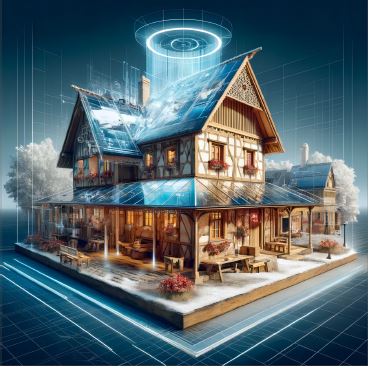
The integration of tradition and modernity is a major challenge and trend in the design of cultural experience spaces for rural tourism. Designers need to respect and preserve the traditional architectural style and cultural heritage of the countryside, while incorporating modern design elements and technologies to create spaces with traditional flavor and modern comfort and convenience. For example, traditional buildings can be remodeled with modern materials and techniques to increase their durability while maintaining their historical aesthetics. In addition, the introduction of modern information technology, such as AR experiences, can enable visitors to experience traditional culture while enjoying the convenience and novelty of modern technology (Figure 1). Designers should explore how to enhance the attractiveness of traditional spaces through modern visual arts and interactive technologies, while ensuring that the introduction of these technologies does not destroy the original cultural atmosphere. Through this integration, the cultural experience space of rural tourism becomes not only a place to display tradition, but also a window to look into the future.
Environmentally friendly and sustainable design
Environmentally friendly and sustainable design is particularly important in the design of cultural experience spaces for rural tourism. This not only reflects respect for nature and ecology, but also an investment in the sustainable development of tourism in the future. The design should use sustainable materials and utilize local natural resources such as solar and wind energy to reduce the burden on the environment. The rational use of water resources and waste management are also important aspects of the design. In addition, the design should promote biodiversity, for example through the creation of ecological landscapes that not only beautify the environment but also support local wildlife. Designers need to work with ecologists and environmental scientists to ensure that design solutions meet not only aesthetic standards but also ecological and environmental protection standards. In addition, sustainable design should also include support and promotion of the local community, for example by designing for local employment, using local materials, and giving back directly to the community through tourism activities.
Increased interactivity and participation
Improving interactivity and participation is a major trend in the current design of cultural experience spaces for rural tourism. The design should create a multi-sensory experience to stimulate visitors’ interest in participation and desire for interaction. This can be achieved by setting up interactive exhibitions, workshops and other participatory activities, such as handicraft making and traditional cooking experiences. The design should also take into account the needs of visitors of different ages and backgrounds by providing inclusive experiential spaces so that everyone can find activities that suit them, thus deepening their understanding and appreciation of the local culture. Designers should consider how to utilize modern technologies, such as augmented reality and virtual reality, to create an interactive and rich environment that increases visitor immersion. Through the integration of these design elements, the cultural experience space of rural tourism becomes not only a purveyor of knowledge, but also a bridge for emotional connection, enhancing the bond between tourists and local communities.
Development of personalized services
In rural tourism, the development of personalized services has become a key strategy to enhance tourist satisfaction and experience [6]. This service model focuses on a deeper understanding of and response to the individual needs of tourists, with the aim of providing each tourist with a customized experience that meets his or her personal preferences and needs. Personalized services can range from tailor-made travel itineraries and special dining experiences to one-on-one cultural tours.
For example, using advanced data analytics, tour operators can accurately identify the preferences of different segments of their clientele and design specific activities or routes accordingly. This includes not only the personalized design of routes, but also extends to the personalized configuration of accommodation, such as providing special room décor or specific types of beds according to visitors’ preferences. In addition, through the real-time update function of mobile apps and online platforms, tourism service providers can push information to tourists that is relevant to their interests, such as local cultural events, recommendations of special restaurants, and the latest informainformation on neighboring attractions, thus increasing the level of personalization of their services.
Welcome messages and travel preparation tips sent via email or SMS services prior to a visitor’s arrival have become a standard part of personalized services. These messages not only include a basic welcome message and weather forecast, but can also contain recommended local specialties and precautions according to tourists’ preferences. During the visitor experience, personalized services can also extend to the provision of customized tourism souvenirs, such as handicrafts tailored to visitors’ interests, or the organization of a private cooking class for visitors to make and taste local delicacies, all of which greatly enhances visitors’ sense of engagement and satisfaction.
Cultural education and experiential activities
In rural tourism, the provision of cultural, educational and experiential activities is another important direction for service innovation. Such activities aim to enable tourists to understand and experience the local culture and way of life more deeply through in-depth immersion experiences. Including the learning of traditional crafts, explanation of local history, and exploration of natural ecology, these activities not only provide knowledge and enjoyment, but also serve as an important means of cultural transmission.
For example, tourists can be invited to participate in local festivals or cultural ceremonies, which not only transforms them from spectators to participants, but also deepens their experience and memory of the event. In certain rural areas, visitors can be organized to participate in traditional farming activities such as rice planting, harvesting and other seasonal farm work, an experience that enables visitors to visualize the realities of rural life. In addition, by setting up cultural workshops, tourists can learn to make ceramics, traditional paintings or local dances under professional guidance, and this hands-on and creative process not only stimulates their interest, but also deepens their feelings and understanding of the local culture.
With the organization of these educational and experiential activities, rural tourism goes beyond providing a leisure destination and becomes a multi-functional platform for cultural transmission and education. These activities allow visitors to enjoy their holidays while having meaningful learning and growth experiences that leave a deep and lasting impression on them, while also bringing both economic and cultural benefits to local communities. By continually innovating and improving these services, rural tourism regions are better able to meet the needs of modern tourists while promoting local economic and cultural development.
Evaluation index system for cultural experience space design
The design of cultural experience spaces is key to the attractiveness of rural tourism, and the establishment of a system of evaluation indicators is crucial and needs to be carefully conceptualized to ensure that every detail promotes cultural understanding and participation. The system needs to address the following key dimensions (Table 1):
Cultural disclosure: The indicator should measure the extent to which the design of the space successfully discloses the cultural spirit and historical lineage of the area, including the presentation of traditional customs, local art, language and festivals.
Environmental compatibility: This indicator assesses the extent to which the design is in harmony with the surrounding natural environment, whether local materials have been used, or natural resources have been respected and optimized in a manner.
Community engagement: This indicator tests whether the design encourages and facilitates visitor interaction with the local community, which includes the role of community members in the planning and implementation of cultural activities.
Sensory experience degree: aims to evaluate whether the space design provides rich sensory stimulation, such as visual art, acoustics, tactile experience and local flavor.
Educational value dimension: This dimension emphasizes whether the design helps visitors to learn and absorb new knowledge, especially about the history, culture and ecology of the rural area.
Accessibility and comfort: The indicator system should ensure that all visitors, including those with special needs, can easily participate in the experience while enjoying a comfortable and safe environment.
Degree of innovative implementation: Measurement of novel elements incorporated into the design of the space, such as the application of technology, the use of innovative materials, and the exploration of non-traditional layouts.
Maintenance and sustainability: Indicators should also assess the long-term sustainability of the design, including the cost of maintenance, the durability of materials and their long-term environmental impact.
In order to create a practical and theoretically grounded system of evaluation indicators, it is important to ensure that it covers all key aspects of the design of cultural experience spaces. In addition to the dimensions mentioned above, the evaluation indicator system should also include:
Adaptability and flexibility: Space design must be able to adapt to changing cultural trends and social needs. Evaluation indicators should consider the flexibility of the design to accommodate different scales and types of cultural activities.
Spatial interactivity: It should be assessed how the design of the space facilitates communication and interaction between visitors and between visitors and the spatial environment. This relates to how the design facilitates social and educational interactions through layout and amenities.
Technology integration: As technology advances, the integration of technology in the design of a space becomes increasingly important. This includes how modern technology can be used to enhance the visitor experience, such as Augmented Reality (AR), Virtual Reality (VR), and interactive exhibitions.
Service Quality Degree: Evaluates how the design of the space affects the quality of the service, including the staff’s understanding of the culture, the professionalism of the service and its contribution to the visitor experience.
Economic feasibility: Indicators should include the direct and indirect economic impacts of the design, such as the creation of jobs, promotion of local product sales, etc.
| System level | Level 1indicators | Secondary indicators |
|---|---|---|
| Evaluation of cultural experience space design | Cultural transmissibility | - Retention of local architectural features |
| - Presentation of traditional art elements | ||
| - Diversity of cultural activities | ||
| Environmental integration | - Conservation and integration of natural landscapes | |
| - Proportion of eco-materials used | ||
| - Ecosystem balance and conservation | ||
| Community Interactivity | - Community participation | |
| - Satisfaction of the local population | ||
| - Community economic benefits | ||
| Experience Diversity | - Number and type of experiential projects | |
| - Degree of customization of activities | ||
| - Innovative nature of experiential activities | ||
| Ease of participation | - Spaceaccessibility design | |
| - Clarity of the signaling system | ||
| - Accessibility of information services | ||
| Service innovativeness | - Application of emerging technologies | |
| - Optimization of service processes | ||
| - Application of customer feedback | ||
| Technology Integration | - Integration of interactive technologies | |
| - Technology adds value to the experience | ||
| - Ease of use and acceptability of technology | ||
| sustainability | - Long-term benefits of the design programme | |
| - Efficient use of resources | ||
| - Minimization of environmental impact by design | ||
| economic viability | - Return on investment | |
| - Operational cost-benefit analysis | ||
| - Impact of the project on the local economy |
Reasons for the selection of the evaluation indicator system
The selection of the evaluation indicator system should follow a clear set of principles to ensure that the evaluation is objective and comprehensive. The following are key reasons to consider when selecting an evaluation indicator system:
Cultural sensitivity and authenticity: The evaluation system must be highly sensitive to local culture to ensure that the design programme is an authentic reflection of local cultural characteristics and values.
Sustainability and development: The selection of indicators should help to promote the long-term development of rural tourism, including the promotion of economic growth, cultural preservation and community well-being.
Inclusiveness and equity: The evaluation system should take into account all groups, including members of the local community, tourists from different cultural backgrounds and people with special needs.
Participation and interaction: The evaluation system should encourage active participation of visitors and interaction with the cultural environment to enhance the educational and recreational value.
Evidence base and case studies: The indicators selected should be based on empirical studies and case analyses to ensure their validity and usefulness.
Through such an evaluation index system, not only can the design of cultural experience space be comprehensively assessed and monitored, but also provide important feedback and improvement directions for designers, planners and managers. The application of such a system will ensure that every step of rural tourism space design is carefully considered, ultimately achieving the purpose of enhancing the cultural experience, strengthening local characteristics and promoting the sustainable development of rural tourism.
In exploring the development of rural tourism, this study is committed to constructing a comprehensive spatial design framework for cultural experience, as well as exploring the application of service innovation in enhancing tourism experience. The core purpose of the study is to create a unique cultural experience environment, in which the spatial design not only satisfies the aesthetic pursuit, but also carries the transmission and inheritance of culture on a deeper level. The implementation of each design aims to accurately capture the cultural spirit of the countryside; the pace of service innovation is dedicated to stimulating cultural vitality and integrating passion into every detail of tourism. This process not only meets the needs of tourists, but more importantly activates every aspect of the trip, making it fuller of life. Looking to the future, rural tourism will show more active development through continuous innovation and exploration, so that rural tourism will not be limited to a simple escape from reality, but will become a lasting cultural experience, transforming the memory of each trip into a long-lasting impression of the soul.
Funding: Youth Fund for Humanities and Social Sciences Research, Ministry of Education (23XJC760003).